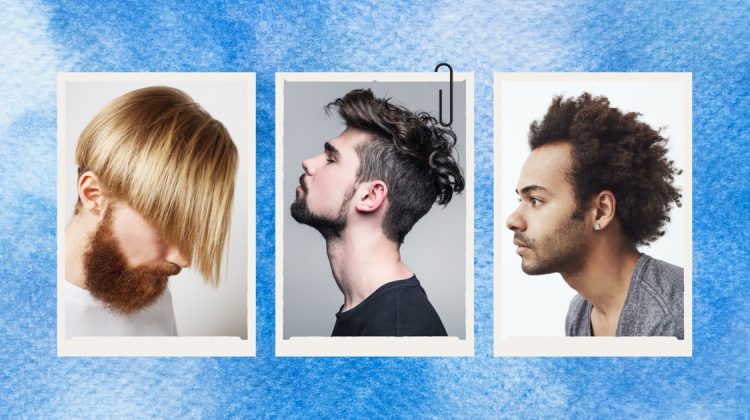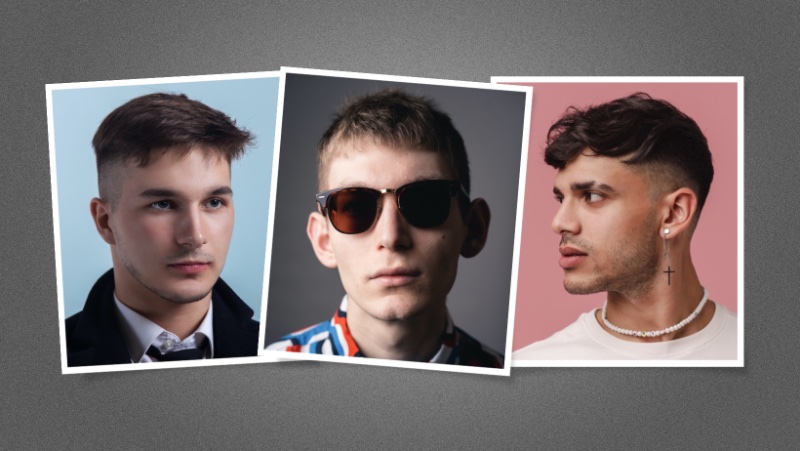
French crop haircuts have solidified their status as the ultimate low-maintenance, high-impact hairstyle for the modern man. Characterized by its signature forward-fringe and faded sides, the French crop is a versatile solution for every hair type, from thick and straight to unruly curls.
Whether you are looking for a sharp textured crop to add volume or a skin fade for a clean finish, this guide breaks down the best variations to take to your barber in 2026.
Defining the French Crop
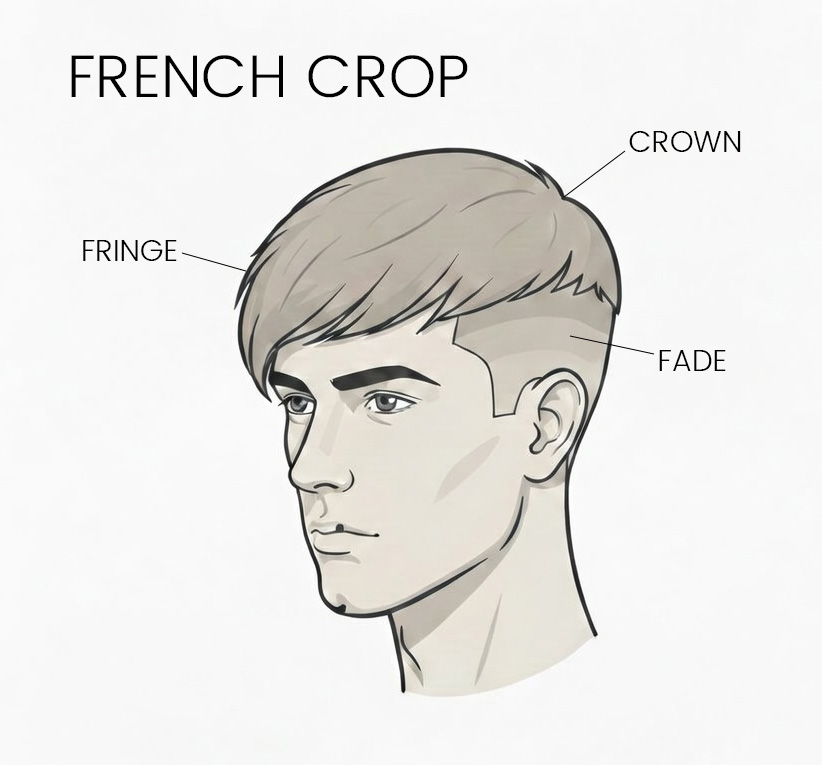
Before choosing a variation, it is important to understand the three pillars that define a true French crop. Unlike a standard buzz cut or a crew cut, the French crop relies on a specific balance.
The Fringe: The hallmark of the cut. It can be cut blunt and straight for a bold look, or point-cut and “choppy” for a textured, modern finish.
The Crown: Hair is clipped to follow the natural growth pattern but pushed forward. This creates volume and is a top-tier solution for men looking to disguise a receding hairline or thinning crown.
The Fade: While the top remains consistent, the sides offer total customization. From a low taper for a conservative office look to a high skin fade for maximum contrast, the fade dictates the “attitude” of the cut.
Whether your hair is straight, wavy, or curly, a French crop style can be tailored to your face shape. Below, we break down the most iconic versions of this cut and how to style them.
French Crop Haircuts
Classic French Crop
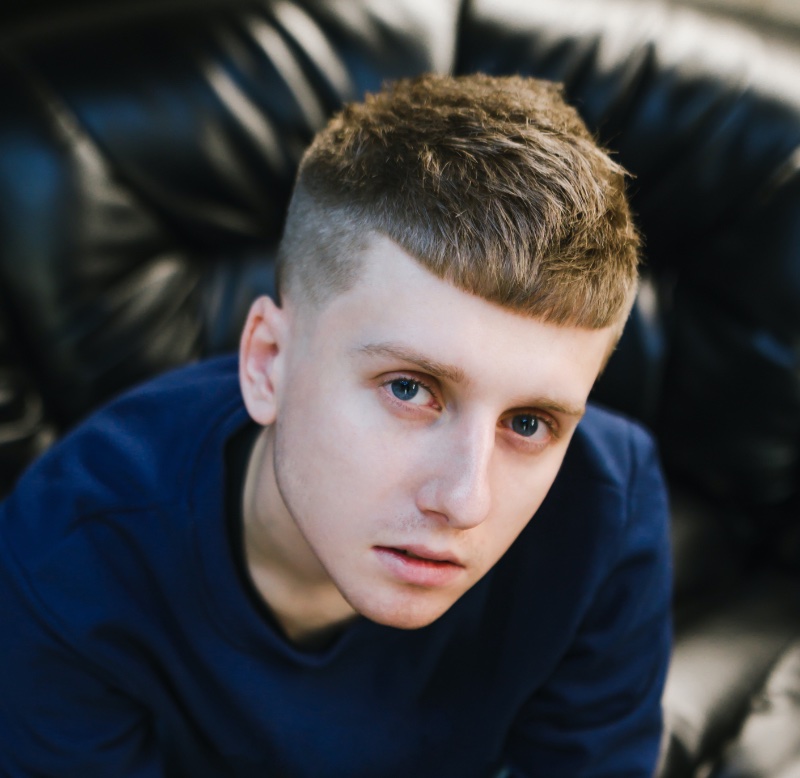
The classic French crop is the gold standard for men who prioritize a clean, sharp silhouette with zero daily fuss. Unlike modern variations that lean into extreme fades, the classic version focuses on proportional balance and a uniform taper.
| The Cut Details | Best For |
|---|---|
| The Fringe: Traditionally cut blunt and straight across the mid-forehead. It provides a structured frame for the face. The Sides: Typically features a taper fade or a conservative #2 or #3 guard. This avoids the “scalp-heavy” look of a skin fade while keeping the ears and neckline clean. The Texture: The top is kept at a moderate length (1–2 inches) and point-cut to allow the hair to lay flat but with visible separation. | Face Shapes: Oval, Square, and Heart shapes. Hair Type: Naturally straight or slightly wavy hair. Styling Requirement: Minimal. A pea-sized amount of matte styling clay or texturizing salt spray is all you need to keep the forward-sweeping motion in place. |
Fringe French Crop Fade
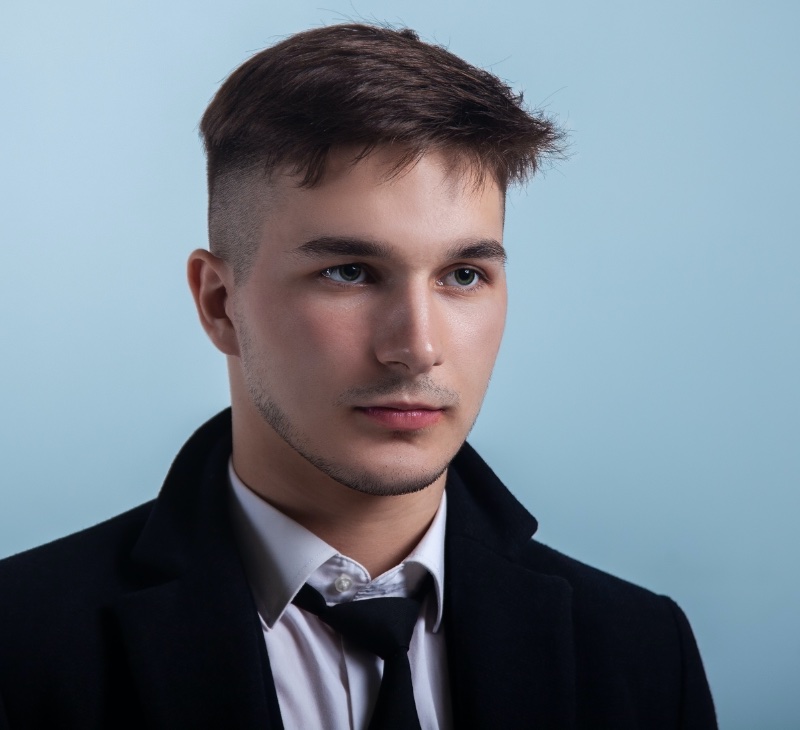
The fringe French crop fade is all about high contrast. By combining a heavy, linear fringe with a tight high skin fade, this style creates a bold architectural look that draws immediate attention to the eyes and brow line.
| The Cut Details | Best For |
|---|---|
| The Fringe: Unlike the textured version, this fringe is often cut blunt and dense. It hangs lower on the forehead, typically stopping just above the eyebrows. The Fade: The transition starts high, usually above the temple, dropping down into a skin-level finish at the ears and nape. This “disconnect” makes the hair on top appear thicker and more voluminous. The Finish: This look thrives on a “solid” appearance. It’s the most structured version of the crop. | Face Shapes: Round or Oval (the high fade adds much-needed height and angles). Hair Type: Straight, thick, or coarse hair that can hold a sharp, straight line. Styling Requirement: Use a heavy-hold matte pomade. Since the fringe is the focal point, you want to ensure it stays flat and centered throughout the day without splitting. |
Textured French Crop
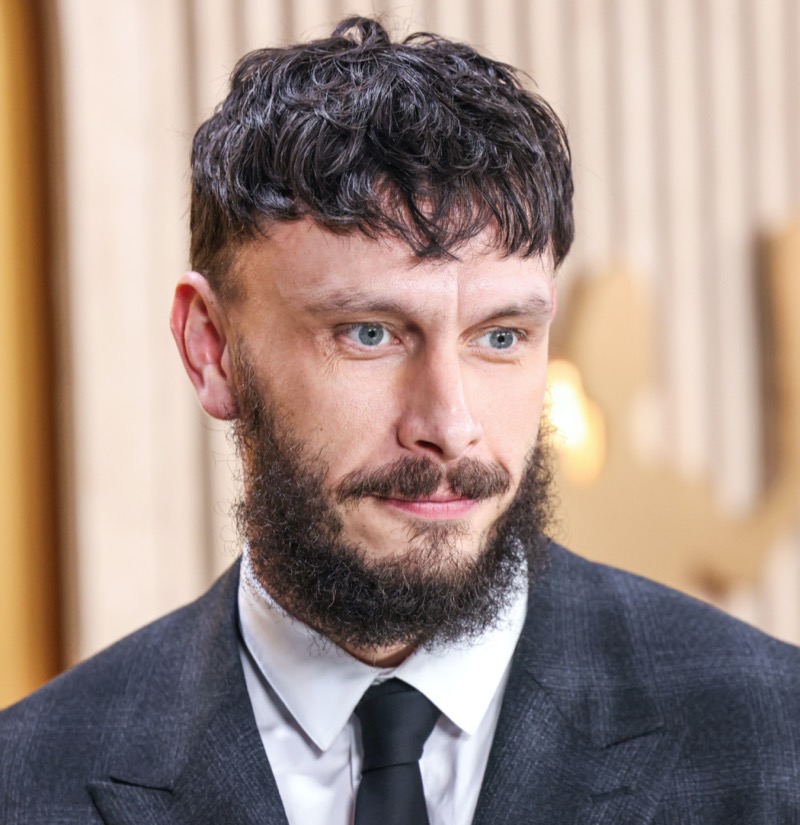
As seen on style icons like Richard Gadd, the textured French crop is the “relaxed” cousin of the blunt version. This is the ideal choice if you want the benefits of a short cut, while avoiding the rigidness of a military style.
| The Cut Details | Best For |
|---|---|
| The Fringe: Instead of a straight line, the fringe is choppy and irregular. The barber uses thinning shears or “slithering” techniques to remove weight and add movement. The Layers: Multiple lengths are cut into the top of the hair. This prevents the “helmet” look and allows the hair to be styled “messy” or “neat.” The Sides: Pairs best with a mid-drop fade or a soft taper to keep the focus on the movement up top. | Face Shapes: Square and Angular (the messy texture softens sharp features). Hair Type: Thin or fine hair (texture creates the illusion of volume) or wavy hair. Styling Requirement: Sea salt spray or volumizing powder. These products provide “grip” and a lived-in look without making the hair look greasy. |
French Crop Fade
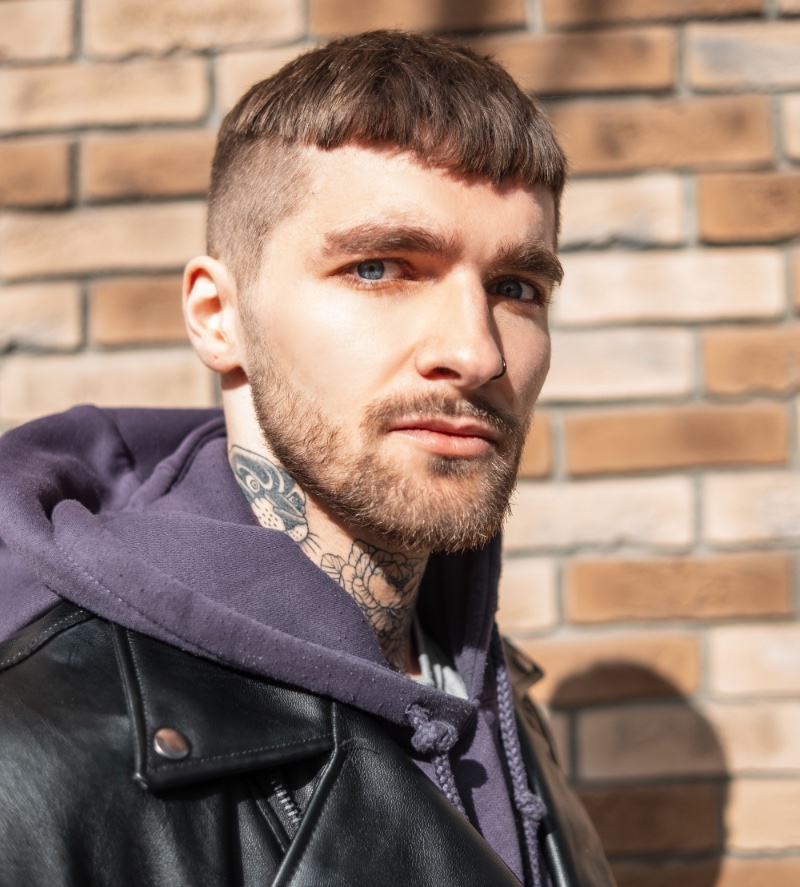
While the classic version uses a traditional taper, the French crop fade is the modern standard. This style utilizes a gradient effect to blend the hair from “skin” at the neckline to “textured length” at the crown. It is the ultimate choice for men who want to sharpen their jawline and create a more masculine, angular head shape.
| The Cut Details | Advice |
|---|---|
| The Transition: You can choose between a Low, Mid, or High fade. A high fade offers a more “aggressive” streetwear look, while a low fade is more “professional.” The Nape: Most modern crops feature a blurred neckline, which keeps the haircut looking “fresh” for longer as the hair grows back in. The Silhouette: The fade should be “weighted,” meaning it leaves slightly more hair around the corners of the forehead to keep the “square” shape of the crop intact. | Pro Tip: Ask for a skin fade if you have dark hair; the contrast between the scalp and the hair creates a “pop” that makes the texture on top stand out. Maintenance: Requires a touch-up every 2–3 weeks to keep the fade lines crisp. |
French Crop for Straight Hair
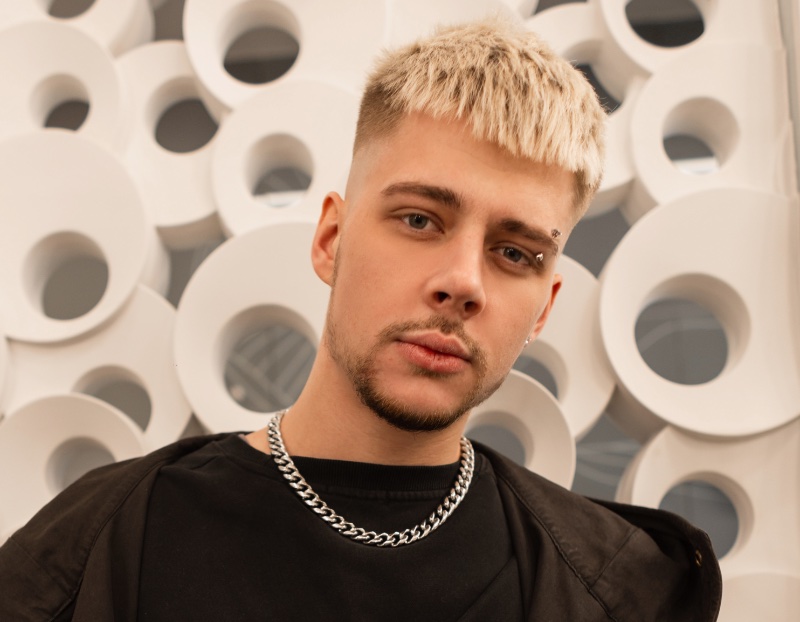
Straight hair can often look “limp” or “flat” if not cut correctly. The French crop for straight hair solves this by using vertical layers to create “pockets” of air, giving the hair a much-needed lift and a thicker appearance.
| The Cut Details | Best For |
|---|---|
| The Fringe: We recommend a choppy or point-cut fringe for straight hair. A perfectly blunt line on straight hair can sometimes look too much like a bowl cut. Adding texture breaks that line up for a more rugged feel. The Crown: Hair is cut shorter at the back and gradually gets longer toward the front. This “wedge” shape naturally pushes the hair forward without the need for heavy styling products. The Sides: A tapered side works best to blend the straight hair seamlessly into the skin. | Hair Type: Fine, straight hair that typically lacks volume. Styling Requirement: Volumizing powder or sea salt spray. Apply to the roots and “scrunch” the hair forward with your fingers to create the signature messy-yet-controlled look. |
Curly French Crop
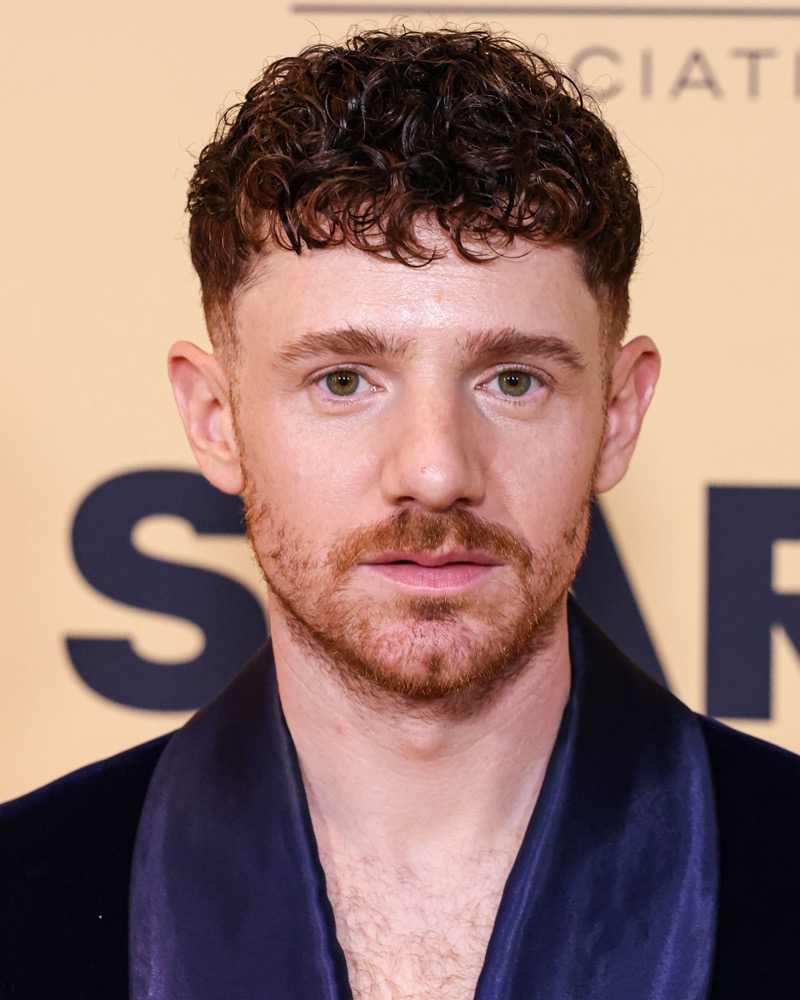
The curly French crop is the ultimate solution for men who struggle with unruly texture. Instead of fighting your natural curls, this cut uses them to create volume and a distinct, rounded silhouette. It’s highly effective for managing “poofiness” by removing bulk from the sides while letting the curls take center stage on top.
| The Cut Details | Best For |
|---|---|
| The Fringe: Unlike straight hair, the fringe on a curly crop is left textured and organic. It shouldn’t be cut in a straight line; instead, the barber should “hand-cut” individual curls to ensure they sit flat against the forehead. The Sides: A mid-to-high drop fade is recommended. The “drop” follows the curve of the head, providing a clean frame that makes the curls on top “pop.” The Crown: Leave extra length at the crown. This prevents the “flat spot” that often happens when curly hair is cut too short. | Face Shapes: Oval and Diamond (the volume on top balances narrower temples). Maintenance: Use a sulfate-free shampoo to keep curls hydrated. Styling: Apply a curl-defining cream or a sea salt spray to damp hair. Air-dry or use a diffuser for maximum definition. |
Messy French Crop with Mid Fade
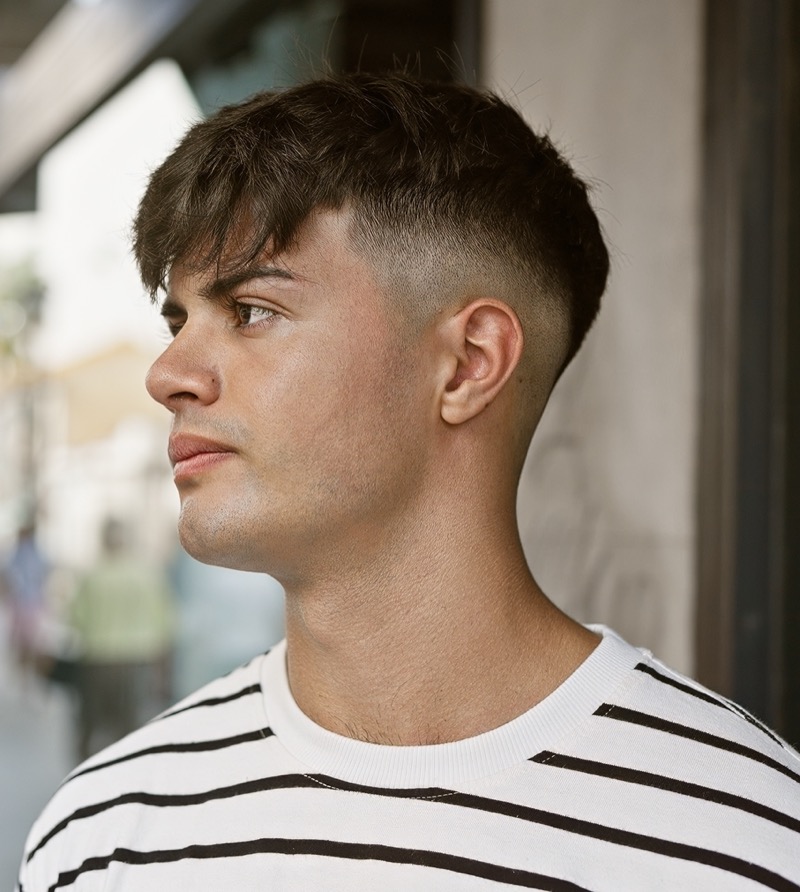
The messy French crop is for the man who wants a “just rolled out of bed” look that still feels deliberate. It relies on heavy internal layering to create “movement” even when the hair is relatively short.
| The Cut Details | Best For |
|---|---|
| The Layers: The barber will use point-cutting or a razor to create different lengths throughout the top. This prevents the hair from looking like a solid mass. The Mid Fade: A mid fade provides the perfect middle ground. It’s cleaner than a taper but less aggressive than a skin fade. It starts at the temple and creates a smooth shadow effect. The Fringe: Styled in different directions rather than straight down. This “disorganized” fringe helps hide a cowlick or an uneven hairline. | Face Shapes: Square and Heart (the messy texture softens a strong jawline). Hair Type: Thinning hair (the messy layers add visual “bulk”) or thick hair that needs weight removed. Styling: Use a matte hair powder or a “gritty” texturizing paste. Work it into the roots and “scrunch” the hair forward and upward. |
Short French Crop
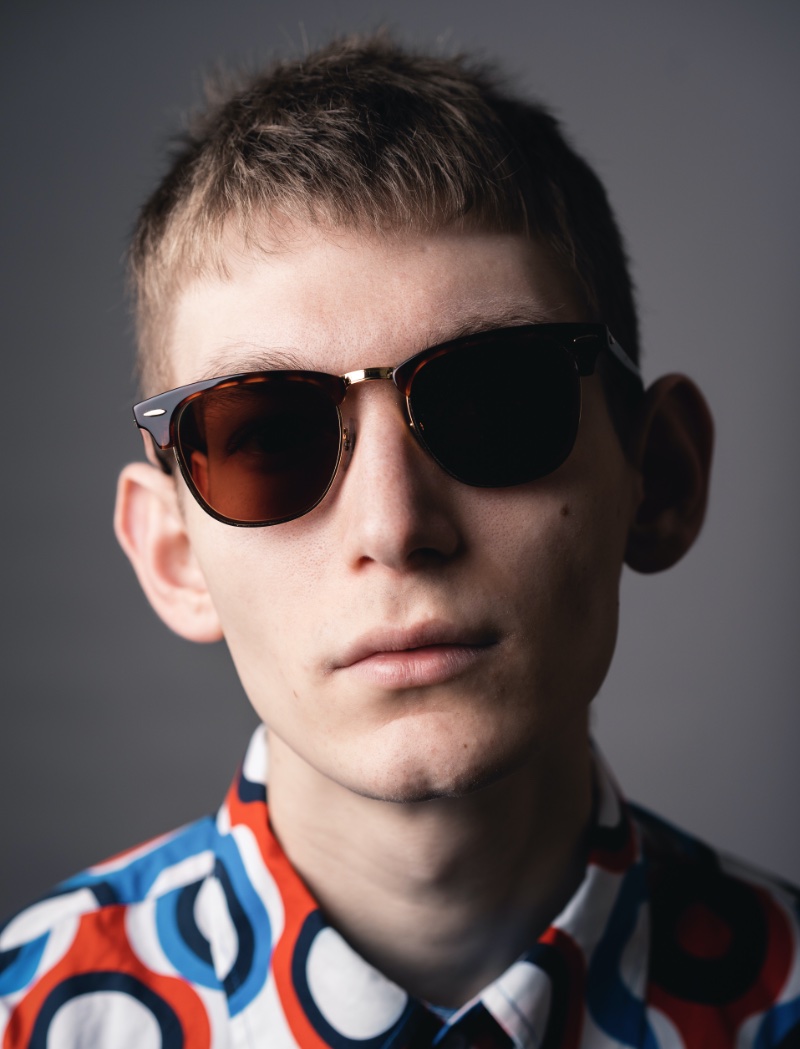
The short French crop is the most practical version of this hairstyle, sitting somewhere between a buzz cut and a classic crop. It is designed for the man who wants a visible “style” but only has 30 seconds to spend in front of the mirror each morning.
| The Cut Details | Best For |
|---|---|
| The Fringe: Cropped very high on the forehead—often just an inch of hair. It is usually blunt-cut to give the illusion of a thicker hairline. The Sides: Typically paired with a high taper or a #1 guard. Because the top is so short, the sides need to be very tight to maintain the “crop” silhouette. The Crown: Cut short enough to eliminate cowlicks, making it a “wash-and-go” favorite. | Face Shapes: Oval and Rectangular. Lifestyle: Athletes, military, or professionals in high-stakes environments. Styling: A tiny amount of matte wax or just a quick towel-dry. It’s nearly impossible to mess this style up. |
French Crop Mullet
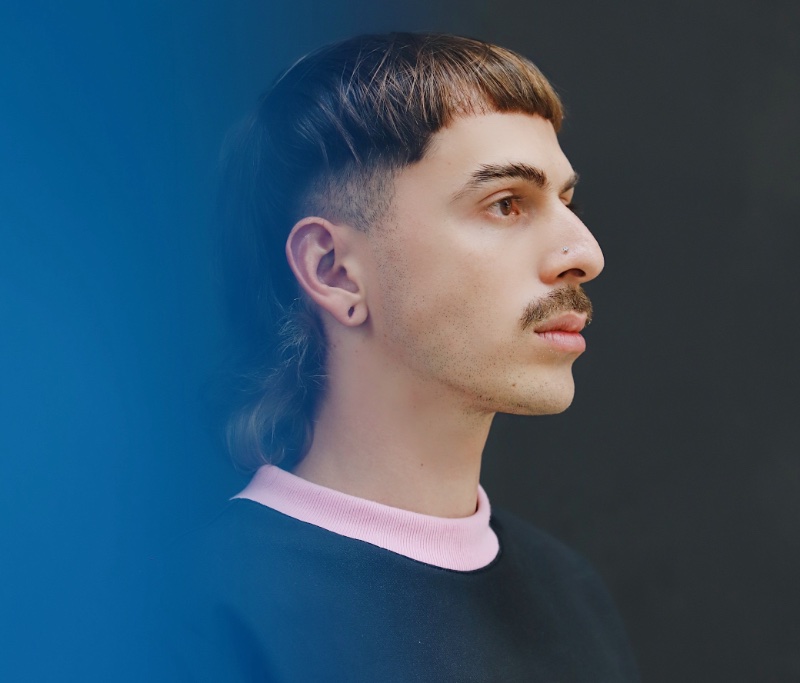
The French crop mullet (often called the “Cropped Mullet”) is a 2026 breakout trend. It combines the disciplined, forward-facing front of a crop with the rebellious length of a mullet at the nape. It’s a “business in the front, party in the back” hybrid that works surprisingly well with textured hair.
| The Cut Details | Best For |
|---|---|
| The Front: A standard textured crop fringe, usually cut choppy to match the “shaggy” energy of the back. The Transition: The sides are often burst faded or tapered behind the ear, creating a sharp disconnect between the front and the back. The Back: Hair is left long enough to cover the collar, often layered to create a “flick” or natural wave. | Face Shapes: Diamond and Triangle (the length at the back adds weight to the lower half of the head, balancing a narrow jaw). Hair Type: Wavy or thick hair provides the best “flow” for the back section. Pro Tip: Ask your barber for a “tapered mullet” rather than a “blocked” back for a more modern, less dated appearance. |
French Crop Skin Fade
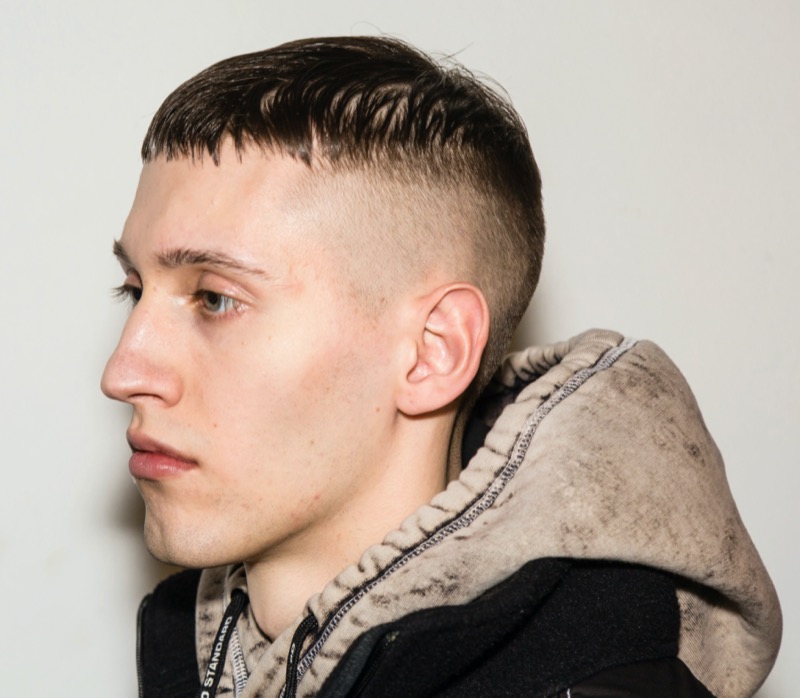
The French crop skin fade is the most precise iteration of this style, stripping away the hair on the sides to reveal the scalp. This creates a bold, architectural contrast that makes the hair on top look thicker and more defined. It is a high-impact choice that effectively narrows the face and sharpens the jawline.
| The Cut Details | Best For |
|---|---|
| The Fringe: Kept dense and usually cut in a straight, horizontal line. Because the sides are so short, the bluntness of the fringe becomes the primary focal point of the haircut. The Transition: Executed with a foil shaver or a triple-zero clipper at the base. The skin portion usually starts at the ears and tapers up into a shadow, providing a seamless blend into the length on top. The Maintenance: High. To keep the skin-to-hair transition looking crisp and “blurry,” you will likely need a touch-up every 10 to 14 days. | Face Shapes: Oval and Angular. The high contrast is particularly flattering if you want to emphasize your bone structure or create a taller head shape. Hair Type: Dark, thick hair provides the most dramatic results, though it is also excellent for thinning hair as it makes the top appear more voluminous by comparison. Pro Tip: Ask your barber for a “blurry” fade transition. This ensures there are no visible lines between the skin and the hair, giving it a professional, airbrushed look. |
Long French Crop
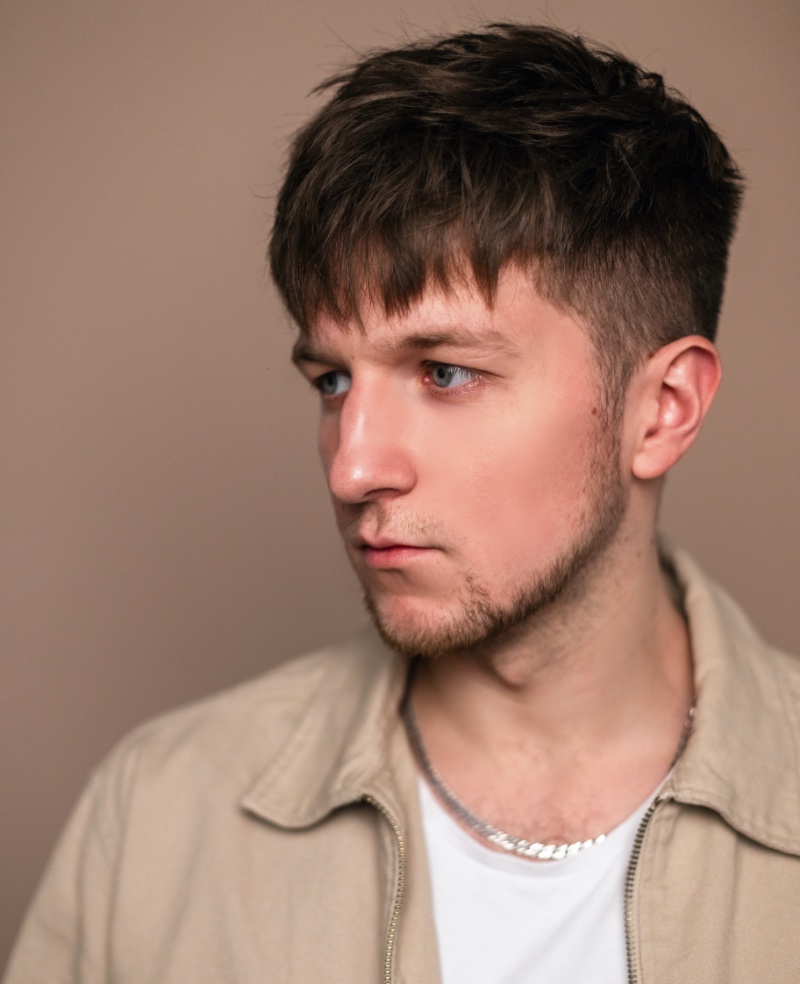
The long French crop is the most versatile version of the cut, allowing for more creative styling and better coverage for high hairlines. This variation keeps the classic forward-swept structure but allows the fringe to hang much lower, often resting just above the eyebrows.
| The Cut Details | Best For |
|---|---|
| The Fringe: Heavily textured and long. Rather than a stiff line, the fringe is cut to have a shaggy or piecey appearance that can be swept to the side or left to hang straight down. The Transition: Typically paired with a low taper or a subtle fade. Keeping the sides slightly longer than a skin fade helps balance the significant length on top, preventing the style from looking top-heavy. The Texture: Internal layers are essential. The barber will remove weight from the middle of the hair to ensure it has natural swing and doesn’t sit flat against the forehead. | Face Shapes: Heart and Oval. The extra length at the front provides balance for those with a more prominent forehead or a narrower chin. Hair Type: Straight or wavy hair. This length allows natural waves to form, adding to the effortless, relaxed aesthetic. Pro Tip: Use a lightweight grooming cream or sea salt spray rather than a heavy wax. This allows the hair to retain its natural movement throughout the day. |
French Crop with Beard
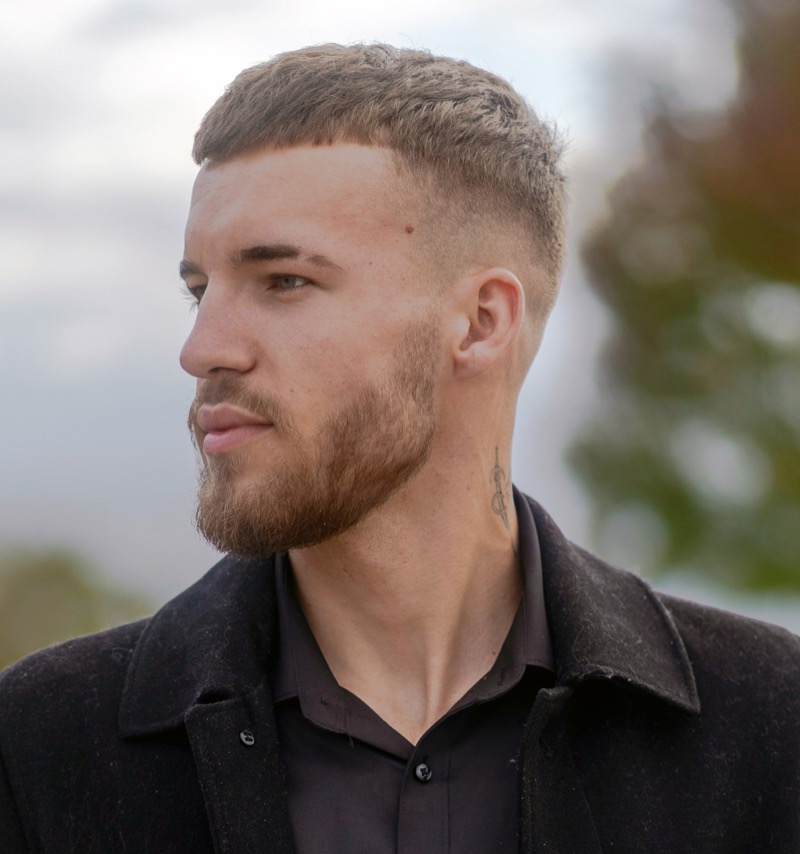
A French crop with a beard is all about creating a balanced frame for the face. This combination is particularly effective for men with softer features, as the sharp lines of the crop and the structure of the beard work together to create a more masculine, chiseled profile.
| The Cut Details | Best For |
|---|---|
| The Fringe: Usually kept shorter and more choppy to prevent the face from being overwhelmed by hair. A short fringe draws the eye upward, balancing the weight of the beard. The Transition: Focused on the sideburns. A temple fade is used to disconnect or taper the haircut into the beard, ensuring the two sections don’t look like separate entities. The Styling: Requires a matte product for the hair and a hydrating balm for the beard. Keeping both textures healthy ensures the look remains professional and well-groomed. | Face Shapes: Round and Square. The beard adds length to the chin while the crop adds structure to the forehead, resulting in a more symmetrical appearance. Hair Type: Any hair type works, but it is a standout choice for men with coarse hair that can match the rugged texture of a full beard. Pro Tip: Tell your barber to line up the beard along the cheeks to match the precision of the fade on the head. This alignment is what separates a professional style from a DIY look. |
Disconnected French Crop
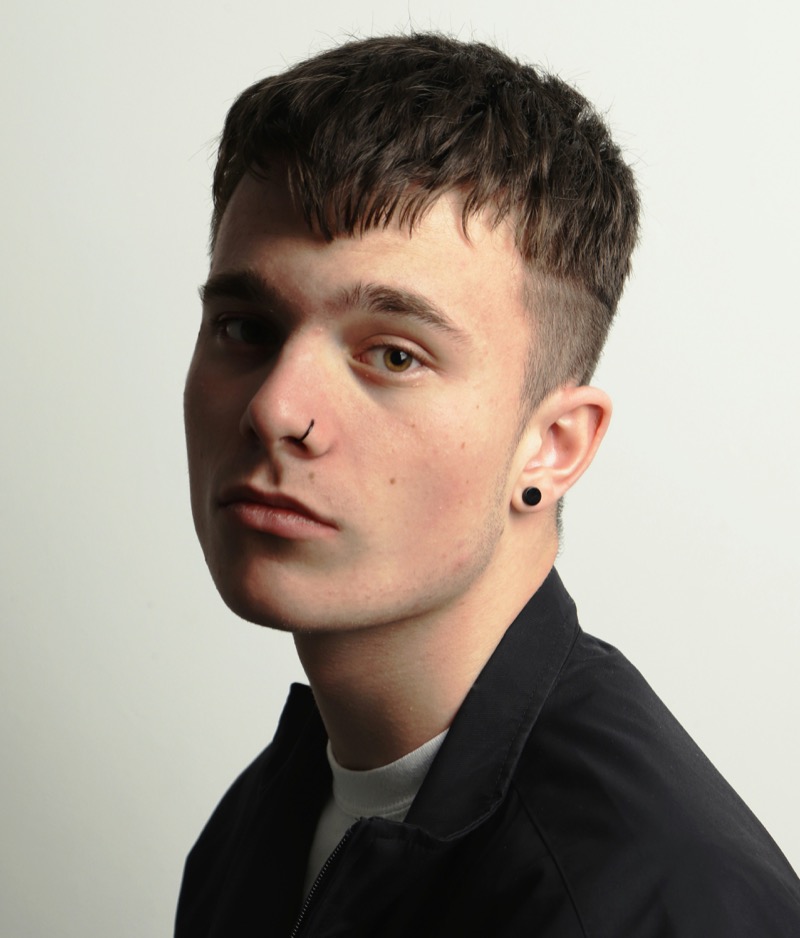
For those seeking a high-fashion, “editorial” look, the disconnected French crop offers maximum impact. Unlike a traditional fade that blends the lengths, a disconnected cut features a sharp, sudden break between the long hair on top and the shaved sides. This creates a “ledge” effect that emphasizes the volume and texture of the crown.
| The Cut Details | Best For |
|---|---|
| The Fringe: Usually kept long and heavily textured to contrast with the skin-tight sides. The Transition: There is no blend. The hair on top sits over the shaved sides, creating a visible “step” or weight line around the parietal ridge. The Sides: Typically shaved down to a consistent length (like a #0 or #1) without a gradient taper. | Face Shapes: Square and Oval. The sharp disconnect creates a very modern, angular silhouette that highlights strong bone structure. Hair Type: Thick hair. This is a secret weapon for removing massive amounts of bulk while keeping style on top. Pro Tip: Because there is no blend, this cut requires a barber with an extremely steady hand to ensure the weight line is perfectly symmetrical on both sides. |
Modern Low Fade French Crop
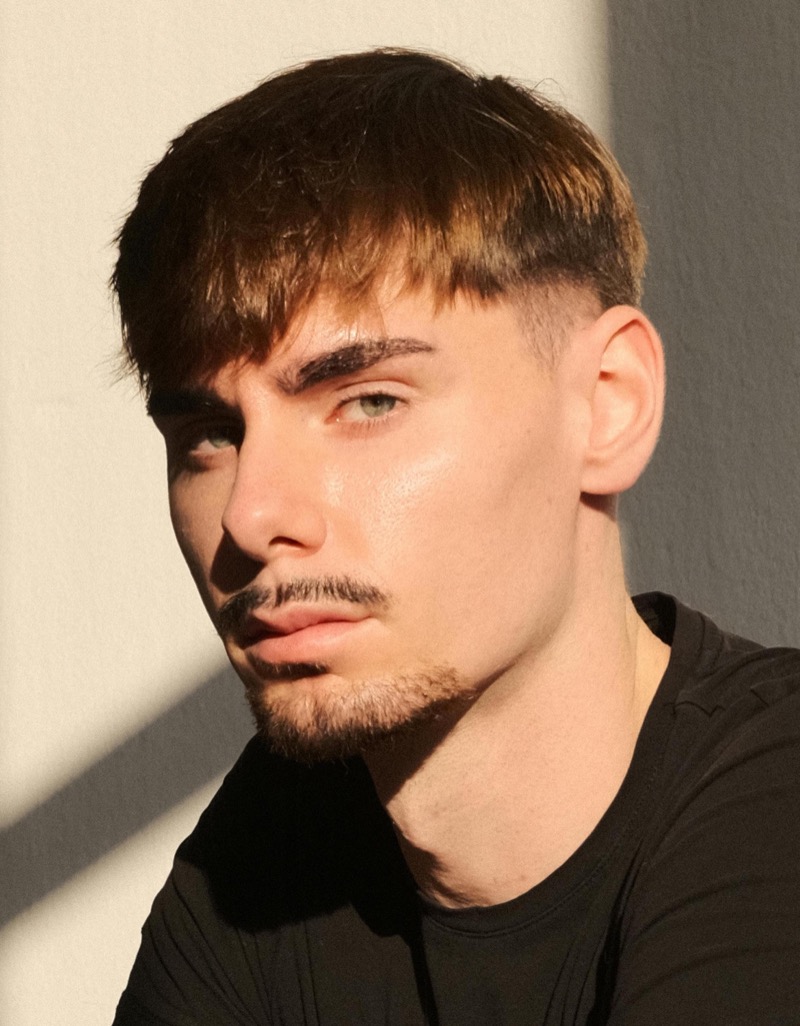
The modern low fade French crop is the most conservative and versatile version of the trend. The fade begins very low, just above the ears and at the very base of the neckline, leaving more hair around the temples. This results in a softer, more rounded silhouette that reads like a timeless classic.
| The Cut Details | Best For |
|---|---|
| The Fringe: Often styled with a soft blunt cut or a slight side-sweep to match the more professional tone of the fade. The Transition: A subtle gradient that starts at the very bottom of the hairline. It provides a clean finish without the scalp-heavy look of a high fade. The Crown: Kept slightly longer to blend seamlessly into the lower fade, preventing any harsh lines or “mushrooming.” | Face Shapes: Rectangular or Triangular. The extra hair on the sides helps balance out longer face shapes by adding width where it’s needed most. Hair Type: Fine or light-colored hair, as it avoids the transparent look that can happen with skin-deep fades. Pro Tip: This is the best “office-friendly” version of the crop. It looks groomed without being too aggressive for a corporate environment. |
French Crop High Fade
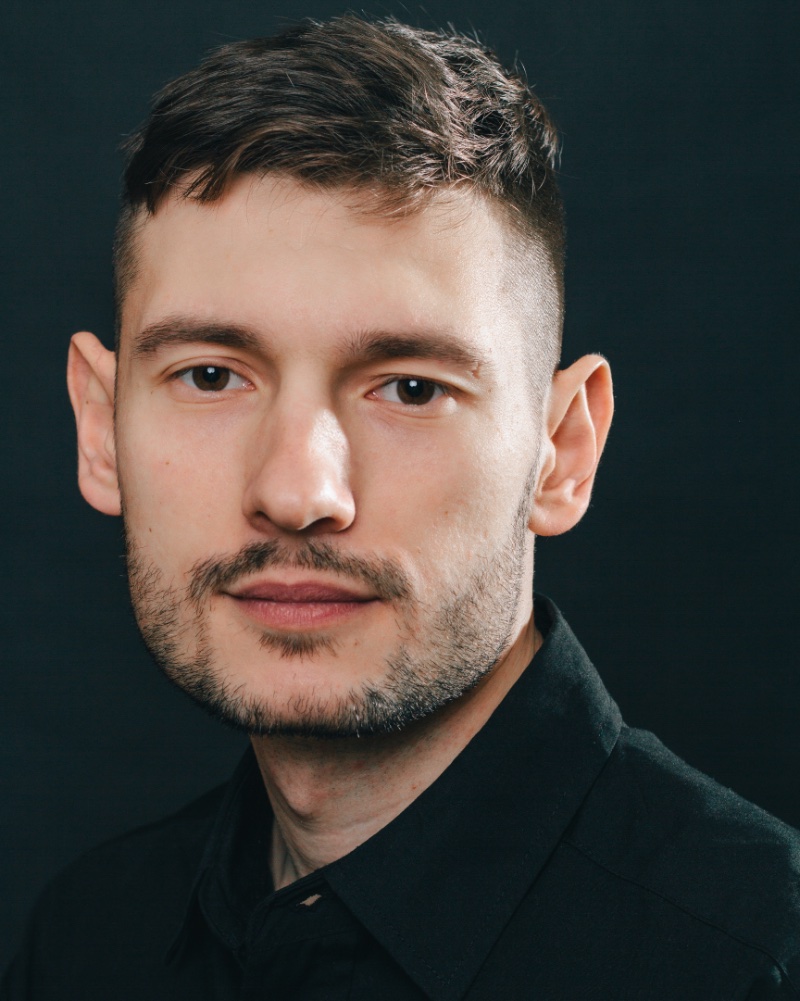
The French crop high fade pushes the contrast to the limit by starting the taper much higher on the head, usually around the temple or the curve of the crown. This version eliminates all weight on the sides, creating a sharp “top-heavy” silhouette that is perfect for making the hair on top look as thick as possible.
| The Cut Details | Best For |
|---|---|
| The Fringe: Cut with a heavy, horizontal line that sits high on the forehead. This bluntness creates a strong focal point and works well to frame the face. The Transition: The fade starts high and drops quickly toward the skin. This “drags” the eyes upward, making it an excellent choice for men who want to appear taller or create a more elongated head shape. The Sides: Typically taken down to the skin (skin fade) to maximize the contrast with the textured hair on top. | Face Shapes: Round and Oval. The high fade adds “corners” to a rounder head shape, making it look more masculine and angular. Hair Type: Darker hair tones. The contrast between the scalp and dark hair makes the texture of the crop “pop” significantly more than on lighter hair. Pro Tip: Ask your barber for a straight weight line across the top of the fade. This reinforces a square, structured shape rather than a rounded one. |
Layered French Crop
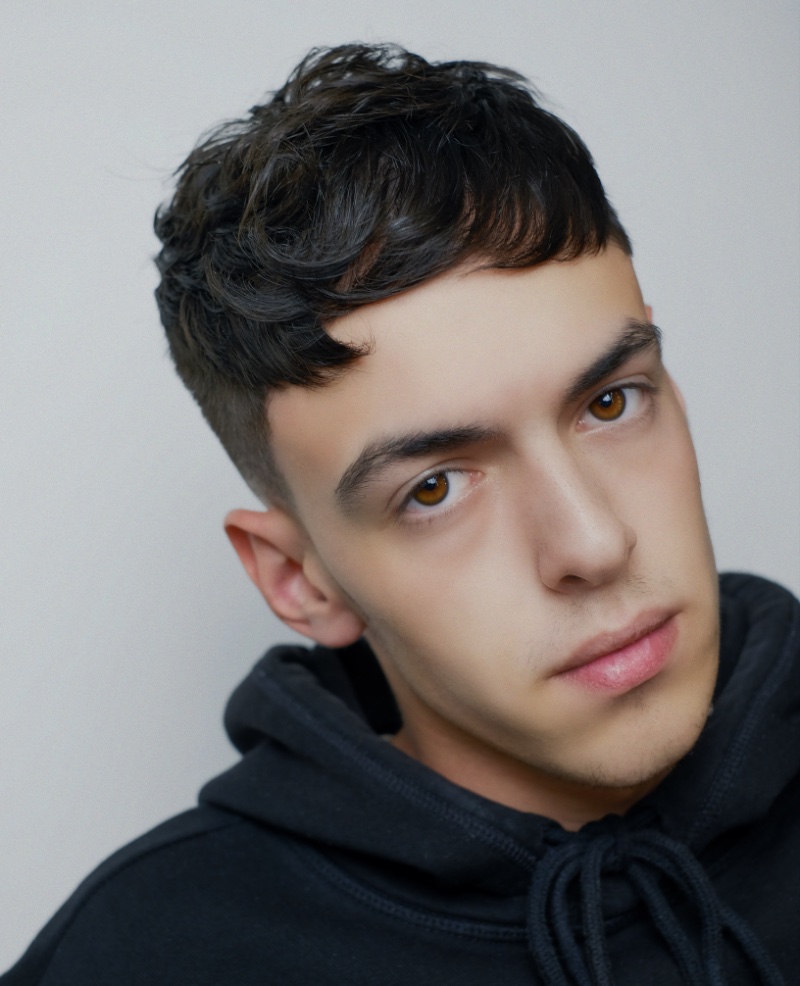
The layered French crop is designed for movement and “flow.” Unlike the blunt versions of this cut, the layered approach uses varying lengths to break up the hair’s surface, resulting in a softer, more casual appearance that doesn’t look overly “barbered.”
| The Cut Details | Best For |
|---|---|
| The Fringe: Point-cut or razor-cut to create a jagged, uneven edge. This “sawtooth” effect is much more forgiving than a straight line and is easier to style if you have a natural cowlick. The Transition: Usually finished with a soft taper rather than a harsh skin fade. This maintains the “lived-in” aesthetic and allows the focus to remain on the movement up top. The Layers: Choppy and vertical. By removing weight from the middle of the hair, the barber allows the hair to stack on itself, which creates natural volume without needing high-hold products. | Face Shapes: Heart and Diamond. The messy texture softens sharp features like a prominent chin or high, angular cheekbones. Hair Type: Wavy or thinning hair. The layers create the illusion of density and help hide “flat spots” where the hair might naturally sit thin. Pro Tip: Use a “gritty” product like a sea salt spray or a volumizing powder. These products provide the “grip” needed to keep the layers from falling flat throughout the day. |
French Crop Top Fade
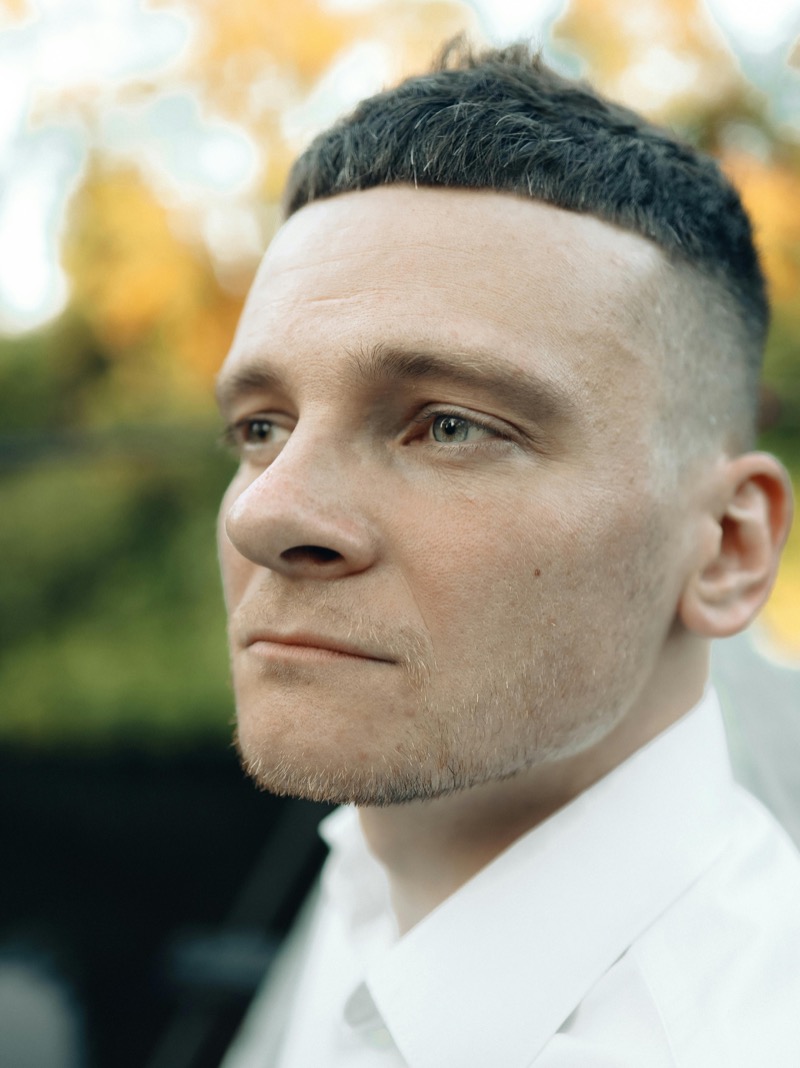
The French crop top fade is a specialized version of the crop that focuses the “fade” energy specifically on the transition between the crown and the temples. It is a tight, compact style that is often preferred by men with very coarse or thick hair that tends to grow “out” rather than “down.”
| The Cut Details | Best For |
|---|---|
| The Fringe: Short and compact. It is designed to stay off the forehead, providing a clean-cut look that works well for active lifestyles or professional environments. The Transition: Concentrated at the very top of the sides. By keeping the “weight line” high, the barber creates a square shape that hardens the features and adds a masculine edge to the head shape. The Crown: Clipped very close to the scalp. This prevents the hair from sticking up at the back, ensuring the forward-swept motion of the crop remains aerodynamic and sleek. | Face Shapes: Square and Oval. This cut emphasizes the top of the head, so it works best for those with well-proportioned features who want a sharp, military-adjacent finish. Hair Type: Coarse, thick, or curly hair. This style excels at “taming” difficult textures by keeping the hair short enough that it cannot frizz or lose its shape. Pro Tip: This cut looks best when the hair is kept matte. Avoid gels or high-shine pomades, as they can make this short style look sparse under bright lighting. |
Wavy French Crop with Drop Fade
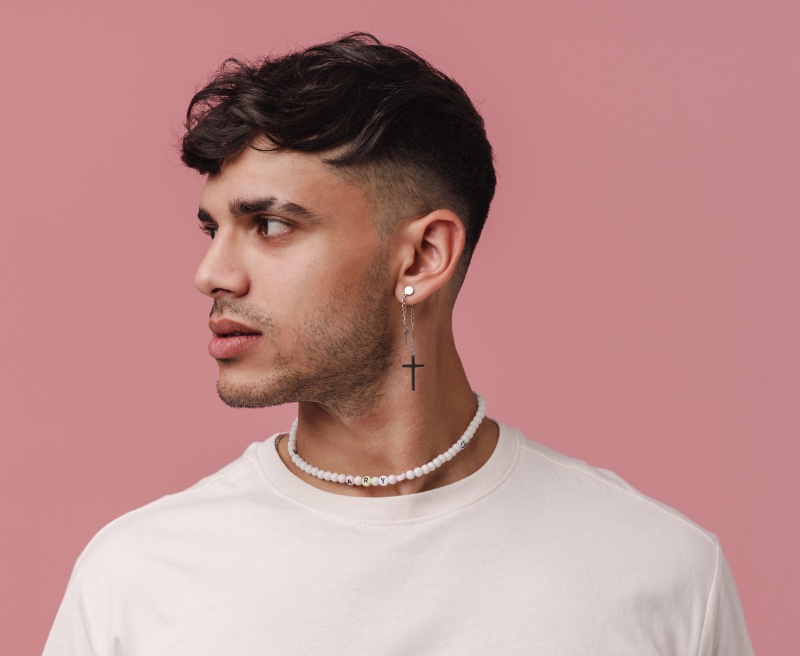
The wavy French crop with drop fade is a high-texture variation that uses the natural “S” shape of the hair to create volume. The drop fade is the perfect companion here, as it follows the natural contour of the skull, dropping down behind the ear, to provide a clean, modern frame that doesn’t interfere with the natural flow of the waves.
| The Cut Details | Best For |
|---|---|
| The Fringe: Left longer than a standard crop to allow the waves to fully form and sit naturally on the forehead. Rather than a blunt line, the edge is usually point-cut to blend with the wavy texture. The Transition: A drop fade that curves downward toward the nape of the neck. This creates a more organic, curved silhouette compared to a straight horizontal fade, which can sometimes look too harsh against soft waves. The Texture: Kept “clumped” rather than separated. The barber will often use thinning shears sparingly to remove weight without destroying the integrity of the wave pattern. | Face Shapes: Oval, Diamond, and Oblong. The volume on top and the curved fade at the back help balance out the proportions of longer face shapes. Hair Type: Naturally wavy or lightly curly hair. If you have straight hair, this look can be achieved with a “mini perm” or by using high-heat styling tools, but it is easiest for those with natural movement. Pro Tip: Apply a sea salt spray or a curl-defining cream while the hair is still damp. Scrunch the hair upward with your hands and let it air dry to ensure the waves stay defined and frizz-free. |
French Crop with Angular Fringe
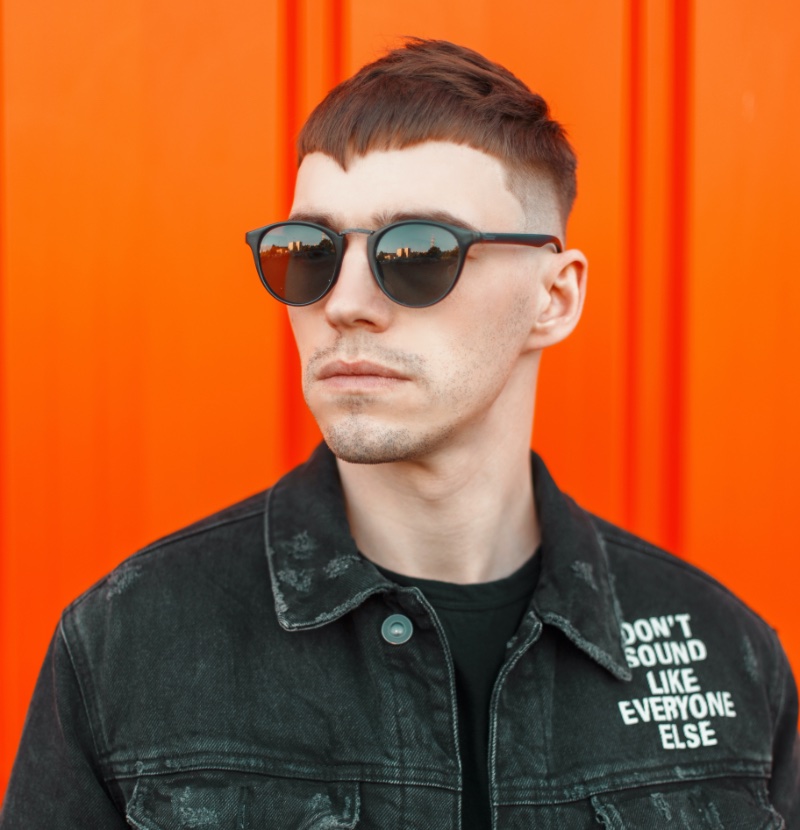
The French crop with angular fringe is a modern, geometric take on the classic style that trades the traditional straight-across look for a sharp, slanted edge. This variation is highly effective for “shaping” the face, as the diagonal line of the fringe creates an asymmetric focal point that adds visual interest and a custom look to the haircut.
| The Cut Details | Best For |
|---|---|
| The Fringe: Cut at a distinct angle, usually shorter on one side and tapering down toward the opposite temple. This creates a diagonal line that can be as subtle or as aggressive as you prefer, helping to break up the symmetry of the face. The Transition: Often paired with a mid to high skin fade. The sharpness of the fade on the sides complements the “hard” line of the angular fringe, making the overall silhouette look purposeful and high-fashion. The Texture: Kept piecey and defined. To make the angle stand out, the hair is often cut with deep point-cuts to create “teeth” or spikes that follow the direction of the slant. | Face Shapes: Round and Heart. The diagonal line of the fringe creates the illusion of length and helps “cut” the roundness of the face, making the jawline appear more defined. Hair Type: Straight, manageable hair is best for maintaining the crispness of the angle. However, it also works well for men with receding hairlines, as the asymmetrical slant can be used to strategically cover thinning areas. Pro Tip: Use a clay or a high-hold matte paste to “set” the direction of the fringe. You want to avoid hair that looks fluffy or soft, as the success of this look depends on the sharpness of the geometric lines. |
The Contemporary French Crop
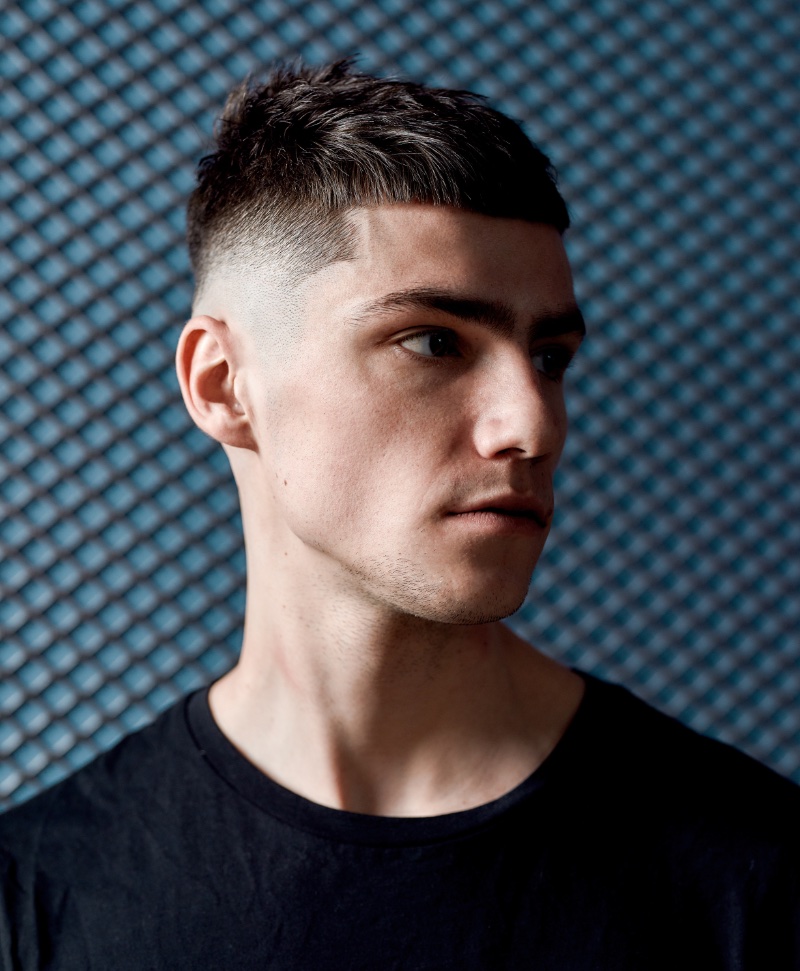
The contemporary French crop is a refined, updated version of the style that moves away from the aggressive, razor-sharp edges of the past. It focuses on a more “organic” look, emphasizing soft texture and a seamless integration between the hair on top and the faded sides. This version is less about high-contrast shock value and more about a sophisticated, effortless aesthetic that looks just as good in a boardroom as it does on a weekend.
| The Cut Details | Best For |
|---|---|
| The Fringe: Instead of a blunt, heavy line, the fringe is point-cut or “shattered” to create a soft, feathered edge. This allows the hair to sit more naturally on the forehead without the harshness of a traditional straight-across crop. The Transition: Typically features a smooth taper or a mid-fade that is blended perfectly. There are no “steps” or “ledges” here; the goal is a gradient that looks like a natural shadow rather than a barbered line. The Texture: Light and airy. The barber will often remove weight from the top using thinning shears or a razor to ensure the hair has a “tousled” quality that is easy to style with minimal product. | Face Shapes: Oval, Square, and Diamond. Because it isn’t overly aggressive, it adapts well to most face shapes by simply adjusting the height of the fade or the length of the fringe. Hair Type: Straight to wavy hair. It’s a perfect solution for men with medium-density hair who want a style that provides volume without looking bulky or “helmet-like.” Pro Tip: This style is best maintained with a “less is more” approach to product. A light dusting of styling powder or a small amount of matte cream will give you that “second-day” hair texture that defines the contemporary look. |
How to Ask Your Barber for a French Crop
Walking into a barbershop and simply asking for a “French crop” can be risky because of the dozens of variations available. To get the best result, you need to be specific about the three pillars of the cut: the fringe, the sides, and the texture.
Using the right language ensures your barber understands exactly where you want the weight to sit and how much skin you want to show.
The Fringe: Specify if you want a blunt cut for a heavy, horizontal look or a point-cut (choppy) finish for a more natural, textured appearance. If you are opting for the long French crop, tell them you want the length to sit just above the eyebrows; for a short crop, tell them you want it at mid-forehead.
The Sides: This is where you define the “vibe” of the cut. Ask for a skin fade if you want maximum contrast, a taper fade if you want a more classic look, or a drop fade if you have a wavy or curly texture you want to emphasize. Be sure to mention how high you want the fade to go—low, mid, or high.
The Texture: If your hair is thick, ask your barber to remove weight using thinning shears or point-cutting to create “internal texture.” For men with fine hair, ask to keep the top more “dense” with minimal layering to help the hair look thicker and fuller.
The Back: Don’t forget the neckline. Most modern crops look best with a tapered finish that fades into the skin, but you can also ask for a “blocked” or “squared” nape if you prefer a more traditional, vintage silhouette.
Pro Tip: Always show a photo. Even with the best terminology, a visual reference from this guide is the most effective way to ensure you and your barber are on the same page regarding the final length and “sharpness” of the fade.